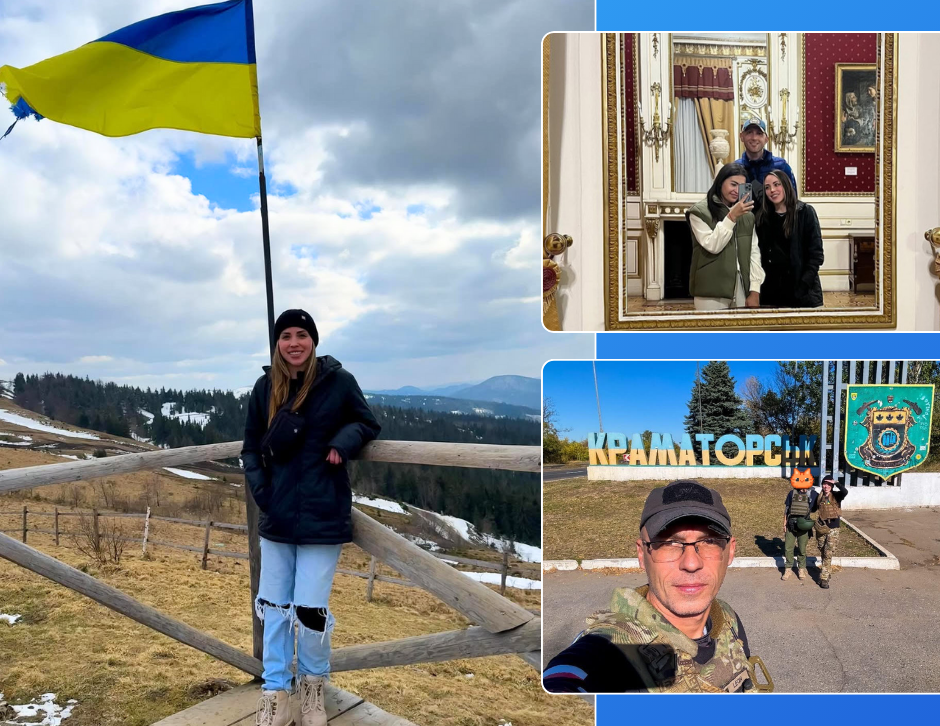
"Veterans Must Be Pulled Out of Their Comfort Zone. We Want to Be Useful" — ENGin for Defenders Student Serhii Halhan's Story

Updated: Aug 19
This article is based on an interview with Major Serhii Halhan conducted by Lesia Shelest and published on the Dutch online platform "Nezalezhnist." Serhii shared it with his ENGin volunteer, Jenefer Bickers, and gave his permission for a shorter version to be published here. We are grateful to both Serhii and Jenefer for bringing this story to the ENGin community.
ENGin for Defenders is free for everyone who defends Ukraine, and it exists thanks to donations from our community. By October 1, Ukraine's Defenders Day, we want to raise $20,000 to be able to welcome 200 more defenders into the program. You can support the ENGin for Defenders program directly here: https://form-renderer-app.donorperfect.io/give/engin-for-defenders. Every donation goes toward welcoming another defender into the program. |

Major Serhii "Phoenix" Halhan of the 24th Separate Mechanized Brigade has worn many roles: a soldier, a survivor, a drone instructor, a fundraiser, and — since December last year — an ENGin student through the ENGin for Defenders program, which connects Ukrainian military personnel and veterans with English-speaking volunteers for free weekly conversation practice.
His ENGin volunteer, Jenefer Bickers from San Francisco, describes him simply:
"Seriii’s courage and determination, fund-raising and advocacy on behalf of his fellow veterans is an inspiring and inspirational message of resilience for everyone, and especially his brothers-in-arms."
What follows is that story, told in his own words.
Finding Purpose After Injury: Sport, Connection, and a Step-by-Step Recovery
Serhii suffered a severe leg injury and partial hearing loss. After 14 surgeries in Ukraine and abroad, his recovery remains incomplete. Yet he has found a new purpose: supporting his unit, staying active in sports, motivating fellow soldiers, assembling FPV drones, and improving his English through the international ENGin project, which connects Ukrainians with volunteers worldwide for language practice and cultural exchange.
We met Serhii in a small Dutch town near Utrecht. It was the holiday season, and most cafés were closed, so we walked through quiet streets decorated with lights. He moved confidently, with only a slight reliance on his prosthetic leg. At 36, with 17 years of military service behind him, Serhii carries both the weight of war and the determination to keep moving forward. He continues treatment in the Netherlands but already speaks about the future — returning to Ukraine, starting a family, and creating a support system for veterans.
"I've gotten used to it," he says about his prosthesis. "Training helps. I walk about 7,000 steps daily. Sometimes more. I cycle, go to the gym, stay active. Sport distracts me and keeps me focused." He pauses before adding: "And I study English, step by step."
English has become more than just a skill — it is part of his recovery. Through ENGin, Serhii practices speaking with a volunteer. For him, it is not only about grammar or vocabulary, but about connection.
"When you communicate with people from different countries, you feel included in the world again," he explains. "You are not isolated. You are part of something bigger."
Daily life in the Netherlands is modest. Serhii lives on a farm in a small trailer provided by a Dutch volunteer through the Netherlands for Ukraine Foundation Initiative (NL4UA). His neighbor is also a Ukrainian military veteran undergoing rehabilitation.
"It's not spacious, but it's enough," he says. "People here are very supportive. That matters more than comfort."
Financially, the situation is difficult. He receives around €400 per month from the Dutch government, similar to other displaced Ukrainians. At the same time, his military payments from Ukraine have been suspended since 2023.
"If you stay abroad for treatment longer than a year, payments often stop," he explains. "You have to constantly prove that you still need treatment. Documents, translations, bureaucracy — it's exhausting."
Drones, Fundraising, and Leading by Example
Despite this, Serhii chooses to focus on what he can control. He remains active in volunteer work and continues to support his unit. In 2024, he joined the Drone Aid Collective, where Ukrainian soldiers undergoing rehabilitation learned to assemble FPV drones. These drones are critical on the battlefield — they provide reconnaissance, help adjust artillery fire, and save lives.
"We organized workshops in different cities," he says. "We have trained both Ukrainians and Dutch people. The demand for drones is only growing, and every drone means a chance to save someone."
This work gave him a renewed sense of purpose. "There is nothing more meaningful than knowing your effort can protect someone," he says. "It motivates you to keep going." Serhii also participated in a charity initiative organized by Dutch veterans — a long-distance run known as the "Marathon of Hope."
The route stretched from the Netherlands toward Ukraine, covering nearly 2,000 kilometers. Although he could not run due to his prosthesis, he joined symbolically. "It was powerful," he says. "People donated, supported us, followed the journey. In two weeks, we raised about €120,000 for medical supplies."
What impressed him most was the way Dutch society treats its veterans."There is respect, real support, and long-term programs," he explains. "Not just words. I would like to see the same approach in Ukraine."
Serhii also believes in leading by example.
"In the army, if you are not an example, no one follows you," he says. "The same principle applies in life."
The Psychological Challenges Veterans Face and Why Connection Matters
At the same time, Serhii speaks openly about the challenges veterans face, especially psychological ones.
"Many feel isolated," he says. "There is survivor's guilt, loss of purpose. Some people stop going out, stop communicating. They feel disconnected from society."
He believes that inactivity is one of the biggest dangers.
"When you stay in your comfort zone too long, you start losing yourself," he says. "Veterans need to be engaged, invited, involved. We need opportunities to contribute."
This is where initiatives like ENGin play an important role. For many veterans, learning English opens doors to education, work, and international communication, but perhaps more importantly, it restores confidence.
"When you speak with someone who listens to you, who respects you, it changes something inside," Serhii explains. "You begin to believe in yourself again."
He emphasizes that support must be consistent. "One event is not enough," he says. "People need ongoing attention. Real communication. Not pity." When asked what keeps him moving forward, Serhii answers simply: "My brothers-in-arms." Many of them are still fighting. Some are no longer alive. "You cannot give up when you remember them," he says.
He continues to help his unit and fellow soldiers. People in the Netherlands trust him and often donate through him. "They ask where help is needed, and I direct it," he explains. "We support each other."
He also addresses how civilians should interact with veterans.
"Don't pity us," he says. "We want to feel normal. Pity keeps us in the past. Respect helps us move forward."
Recovery, Resilience, and the Road Ahead
Serhii lives with partial hearing loss due to acoustic trauma, and after surgeries, his hearing is only partially restored, and he continues to experience constant ringing (tinnitus).
"You adapt," he says. "You find ways to cope."
He clearly remembers the day of his injury — July 7, 2022, near Bakhmut. A mortar shell landed directly in their position. "Out of eight of us, only three survived," he recalls. Despite severe injuries, they managed to apply tourniquets and wait for evacuation. "We supported each other," he says. "That's what kept us alive."
After evacuation, he was transferred to the Netherlands for treatment. For months, doctors tried to save his leg but eventually, amputation became necessary. What followed was a long period of rehabilitation, learning to walk again, regaining strength, rebuilding life from scratch. Yet even in this difficult process, Serhii found meaning. He focused on growth, connection, and helping others.
"You can survive anything if you understand why you are living," he says.
Looking ahead, he plans to return to Ukraine after completing treatment. He wants to create initiatives that support veterans, helping them find jobs, access education, and reintegrate into society. "We need systems, not just ideas," he says.
He believes that veterans themselves must be part of this process. "No one understands our needs better than we do," he explains. "If we don't take responsibility, nothing will change." Serhii remains optimistic despite everything he has experienced.
"Life is not that long," he says. "You want to leave something meaningful behind."
His story is not only about survival — it is about transformation. It is about finding purpose after loss, building connections after isolation, and moving forward despite uncertainty. "We want to be useful," Serhii says. "And we still have a lot to give."
About ENGin for Defenders
Serhii's story is one of thousands unfolding across Ukraine and beyond — stories of men and women who have given everything and are now finding their way forward, one step at a time.
ENGin for Defenders is a free program that connects Ukrainian military personnel and veterans with English-speaking volunteers for weekly online conversation practice. For many participants, it is more than a language program — it is a lifeline to connection, confidence, and the wider world.
If you know a Ukrainian veteran or active military member who could benefit from this program, please share it with them. And if you are an English speaker who would like to volunteer — as Jenefer did — your hour a week can mean more than you imagine.
Also read more about the ENGin for Defenders program on the ENGin blog: Free Online English Practice for Ukrainian Veterans and Military Personnel.
ENGin for Defenders is free for everyone who defends Ukraine, and it exists thanks to donations from our community. By October 1, Ukraine's Defenders Day, we want to raise $20,000 to be able to welcome 200 more defenders into the program. You can support the ENGin for Defenders program directly here: https://form-renderer-app.donorperfect.io/give/engin-for-defenders. Every donation goes toward welcoming another defender into the program. |